This change has completely transformed digital marketing. Businesses that combine SEO and social media marketing usually build better online visibility, stronger audience trust, and more consistent traffic growth.
Google has officially confirmed that likes, comments, and shares are not direct ranking factors. However, social media still influences SEO indirectly in many important ways.
Strong social media activity can help:
- Increase organic traffic
- Improve content visibility
- Generate high-quality backlinks
- Build brand authority
- Improve search visibility
- Boost user engagement
For example, when a blog post becomes popular on LinkedIn or Reddit, more people discover it. Some users may share the article, visit the website, or link back to it from their own blogs. These actions create positive SEO signals naturally.
Modern SEO is no longer only about keywords and backlinks. Search engines now focus more on:
- trust
- authority
- helpful content
- engagement
- user experience
This is why social media SEO has become an important part of modern digital growth.
Businesses that build strong social visibility often perform better in search results because users interact with their content more consistently. At Meta Achievers, we have seen that brands with active social engagement usually build stronger long-term SEO authority.
You will learn how the social media impact on SEO works, how social signals influence rankings indirectly, and how to use different social platforms to improve your overall search performance.
What Is the Relationship Between Social Media and SEO?
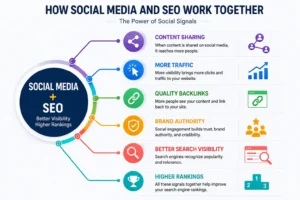
The relationship between social media and SEO is based on visibility, engagement, and authority. SEO helps websites rank in search engines, while social media helps content reach more people faster.
When these two strategies work together, businesses improve:
- search engine rankings
- brand visibility
- content discoverability
- online presence
- audience engagement
For example, imagine you publish a high-quality article on your website. Without promotion, it may take time to gain traffic from Google. But when you share the same content on Facebook, LinkedIn, Reddit, or X, thousands of users may discover it instantly.
This increased visibility creates more opportunities for:
- shares
- mentions
- backlinks
- website visits
- branded searches
All these actions support SEO growth indirectly.
Search engines pay attention to how users interact with content online. When people repeatedly engage with your brand across multiple platforms, it improves trust and credibility. Over time, this can strengthen your overall website authority.
What Is Social SEO?
Social SEO is the process of optimizing social media profiles and content to improve visibility on both social platforms and search engines.
Today, social platforms behave like search engines themselves. Users search directly inside TikTok, YouTube, Instagram, and Reddit to find information quickly.
For example:
- Users search “best phones under $500” on YouTube
- People search “marketing tips” on LinkedIn
- Buyers look for product reviews on Reddit
- Customers discover brands through TikTok search
Because of this behavior, businesses now optimize:
- captions
- profile bios
- hashtags
- video titles
- descriptions
- image alt text
using relevant keywords naturally.
Strong social search optimization helps businesses improve discoverability and build better engagement across multiple digital channels.
Why Social Media Matters for Search Visibility
Social media matters because it helps distribute content to larger audiences. Even great content may struggle to rank if nobody sees it.
Social media platforms help businesses increase:
- referral traffic
- social shares
- brand mentions
- content visibility
- user engagement
This exposure creates more opportunities for backlinks and organic mentions.
For example, if a useful article goes viral on LinkedIn, bloggers or journalists may reference it in their own content. Those natural backlinks improve:
- domain authority
- search rankings
- website credibility
Social media also supports branded searches. When users repeatedly see your content online, they begin searching your business name directly on Google. Search engines often view branded search growth as a trust signal.
That is one reason why brands with strong social visibility often perform better in long-term SEO growth.
Does Social Media Directly Affect Google Rankings?
This is one of the most debated questions in digital marketing.
The simple answer is no. Social media does not directly improve Google rankings. Google has officially stated that social signals like followers, shares, and likes are not direct ranking factors.
However, this does not mean social media has no SEO value.
Social media strongly influences many factors that support SEO indirectly, including:
- traffic
- backlinks
- authority
- visibility
- engagement
- branded searches
So while a viral Instagram post may not directly increase rankings, the visibility it creates can improve your overall SEO performance.
What Are Social Signals in SEO?
Social signals are engagement actions users make on social media platforms.
These signals include:
- likes
- comments
- shares
- reposts
- saves
- retweets
- mentions
Strong social signals show that users find content valuable and engaging.
For example:
- A blog shared heavily on Facebook gains more visibility
- A viral TikTok video drives traffic to a website
- A Reddit discussion increases brand awareness
- A YouTube tutorial earns backlinks from blogs
These activities create indirect SEO benefits by improving reach and authority.
Search engines notice when content receives strong attention across the internet. This increased visibility often leads to more backlinks, traffic, and brand recognition over time.
Google’s Official Position on Social Signals
Google has repeatedly explained that social signals are not direct ranking factors in its algorithm.
But Google still indexes public social content and frequently shows social pages in search results.
For example:
- YouTube videos often rank on page one
- Reddit discussions appear in SERPs
- LinkedIn profiles rank for personal branding searches
- Instagram posts may appear in image search results
This shows that social media still affects overall search visibility.
Google mainly focuses on:
- relevance
- authority
- quality
- user experience
- trustworthiness
Strong social engagement often supports all these areas naturally.
Direct vs Indirect SEO Impact of Social Media
The direct impact of social media on rankings is limited, but the indirect impact is powerful.
Imagine publishing a useful article and sharing it on:
- TikTok
- X (Twitter)
Now thousands of users discover your content. Some users may:
- visit the website
- spend time reading
- share the article
- mention the brand
- link back to the content
These actions improve important SEO signals naturally.
This is why many businesses now combine social media and SEO integration into one complete digital strategy instead of treating them separately.
How Social Media Helps Improve SEO Rankings
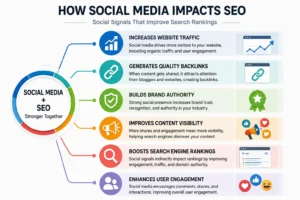
Social media may not directly change Google rankings, but it strongly supports many SEO factors that search engines care about.
Businesses that actively invest in social media for SEO usually build stronger online authority and better content visibility over time.
Let’s look at the biggest ways social media improves SEO performance.
Increases Website Traffic
One of the biggest benefits of social media is traffic generation.
When businesses share blogs, landing pages, videos, or guides on platforms like Facebook, LinkedIn, Reddit, and TikTok, users click those links and visit the website.
Higher traffic helps improve:
- content discoverability
- audience reach
- engagement opportunities
- conversion potential
For example, a useful LinkedIn post can drive hundreds of targeted visitors to a website within a few hours.
This increased visibility helps search engines understand that users are interested in the content.
Strong organic traffic growth also creates more opportunities for:
- shares
- mentions
- backlinks
- repeat visitors
That is why many businesses now combine search engine optimization and social media into one strategy.
Improves Content Visibility and Reach
Even high-quality content needs promotion.
Without visibility, great content may stay hidden for months.
Social media acts like a distribution engine that helps businesses expose content to larger audiences quickly.
When content gets shared across multiple platforms, it increases:
- social shares
- audience reach
- website visits
- brand awareness
- engagement signals
This increased exposure creates more opportunities for users to reference and link back to the content naturally.
For example:
- A useful infographic on Pinterest may get embedded in blogs
- A Reddit discussion may attract journalists
- A viral TikTok may increase branded searches
- A YouTube tutorial may generate backlinks from websites
This is how social media impact on SEO works indirectly.
Generates High-Quality Backlinks
Backlinks remain one of the strongest ranking factors in SEO.
Social media helps businesses generate backlinks by increasing content visibility.
When more people discover useful content, some users naturally reference it in:
- blog posts
- articles
- forums
- newsletters
- videos
For example, a detailed SEO guide shared on LinkedIn may attract:
- marketers
- bloggers
- content creators
- journalists
Some of them may link back to the original article from their own websites.
These natural backlinks improve:
- domain authority
- website credibility
- search visibility
- keyword rankings
Even though most social links are nofollow, the visibility they create can still generate valuable backlinks from authoritative websites.
That is one reason why social media and SEO work well together.
Builds Brand Authority and Trust
Search engines trust brands that users recognize and engage with consistently.
Strong social media activity helps businesses build:
- brand recognition
- audience trust
- online reputation
- authority signals
When users repeatedly see your content on platforms like:
- YouTube
- TikTok
they become more familiar with your brand.
This increases:
- branded searches
- click-through rates
- repeat visits
- audience engagement
For example, if users frequently search your company name on Google, search engines may view your brand as more trustworthy and relevant.
This is why building brand visibility through social media supports long-term SEO growth.
Improves Content Indexing
Search engines need to discover content before ranking it.
When businesses share new pages on social media, search engine crawlers often find those pages faster.
This improves:
- content indexing
- crawlability
- content freshness
- search visibility
Many SEO professionals notice that pages promoted on social media get indexed more quickly than pages with no promotion.
For example:
- A blog shared on X may get discovered within hours
- A YouTube video may appear in Google quickly
- A Reddit discussion may rank fast for trending topics
This faster discovery process helps businesses increase online visibility sooner.
Boosts User Engagement Signals
User behavior plays an important role in SEO.
Search engines monitor how users interact with websites after clicking search results.
Positive engagement metrics include:
- longer session duration
- lower bounce rates
- higher click-through rates
- multiple page visits
- better interaction signals
Social media helps improve these signals because users who already trust your brand are more likely to engage with your content.
For example, visitors coming from LinkedIn or Reddit often spend more time reading useful content because they already discovered it through trusted communities.
This stronger user engagement helps improve overall website quality signals.
How Different Social Media Platforms Support SEO
Different social media platforms support SEO in different ways.
Some platforms improve video visibility, while others support community engagement, backlinks, or branded searches.
Understanding platform-specific strategies helps businesses improve their overall social media SEO strategy.
YouTube SEO
YouTube is the second-largest search engine in the world.
Millions of users search YouTube daily for:
- tutorials
- reviews
- product comparisons
- educational content
- how-to videos
Google frequently ranks YouTube videos directly in search results because users prefer visual learning.
To improve YouTube SEO, businesses should:
- use keywords in titles
- optimize video descriptions
- add subtitles
- create engaging thumbnails
- encourage likes and comments
- use searchable topics
YouTube videos can improve:
- organic traffic
- audience engagement
- backlinks
- content visibility
- search discoverability
Instagram SEO
Instagram has become more searchable over the years.
Google can now index some public Instagram content, which increases the importance of Instagram SEO.
Businesses should optimize:
- captions
- profile bios
- hashtags
- alt text
- usernames
using relevant keywords naturally.
Instagram supports:
- visual discovery
- product visibility
- audience engagement
- brand awareness
Short-form visual content also increases content sharing opportunities.
LinkedIn SEO
LinkedIn is highly valuable for B2B marketing and professional branding.
Optimized LinkedIn pages often rank well on Google for:
- company names
- personal brands
- industry topics
To improve LinkedIn SEO, businesses should:
- publish thought leadership content
- use industry keywords naturally
- optimize company descriptions
- maintain consistent engagement
- build professional authority
LinkedIn also supports:
- referral traffic
- trust building
- branded searches
- audience credibility
TikTok SEO
TikTok is now one of the fastest-growing social search platforms.
Many younger users search directly on TikTok instead of Google.
Popular searches include:
- product reviews
- tutorials
- restaurant recommendations
- travel ideas
- marketing tips
To improve TikTok SEO, businesses should:
- use searchable captions
- include keywords in speech
- add subtitles
- use relevant hashtags
- focus on user intent
TikTok content can also appear in Google search results, improving overall search visibility.
Reddit SEO
Reddit has become extremely important for modern SEO.
Google frequently ranks Reddit discussions because users trust authentic conversations and real experiences.
Businesses can improve Reddit SEO by:
- participating naturally in communities
- answering questions honestly
- sharing valuable insights
- avoiding spam promotion
Reddit helps improve:
- brand authority
- referral traffic
- content visibility
- trust signals
Many businesses now include Reddit in their overall SEO social media strategy because of its growing search visibility.
Facebook and X (Twitter) SEO
Facebook and X help businesses distribute content quickly to large audiences.
Trending posts often increase:
- visibility
- engagement
- shares
- referral traffic
- branded mentions
Businesses should:
- share content consistently
- write engaging captions
- encourage conversations
- use relevant keywords naturally
These platforms also help brands maintain active communication with their audiences, which supports stronger engagement and visibility online.
Best Social Media Strategies to Improve SEO
Building social media profiles is not enough anymore. Businesses need a proper strategy to improve visibility, engagement, and search performance.
The goal of social media and SEO integration is not only to get followers. The real goal is to build:
- authority
- trust
- visibility
- engagement
- traffic
- brand recognition
Let’s look at the best strategies businesses should follow.
Optimize Social Media Profiles
Your social media profiles should clearly explain:
- who you are
- what your business does
- what services you provide
- how users can contact you
Many businesses ignore profile optimization, but optimized profiles improve:
- search visibility
- trust signals
- referral traffic
- branded searches
Use relevant keywords naturally in:
- profile bios
- descriptions
- usernames
- company information
Also add:
- website links
- contact details
- location information
- branded visuals
Strong profiles help businesses appear more professional and trustworthy online.
Use Keywords in Captions and Bios
Modern social platforms understand keywords much better than before.
Platforms like:
- TikTok
- YouTube
now analyze captions, hashtags, subtitles, and descriptions to understand content topics.
Using relevant keywords naturally helps improve:
- social search optimization
- discoverability
- audience targeting
- content relevance
For example, instead of writing a generic caption like:
“New video uploaded”
write:
“Learn how social media helps SEO and improves search engine rankings.”
This gives platforms more context about the content.
However, avoid keyword stuffing. Always write naturally for users first.
Create Shareable and Valuable Content
The best-performing content usually provides real value.
People share content that is:
- helpful
- educational
- entertaining
- easy to understand
- visually engaging
Strong content increases:
- social shares
- backlinks
- website traffic
- audience engagement
- content discoverability
For example:
- detailed guides
- infographics
- case studies
- tutorials
- expert tips
often perform better than promotional posts.
High-value content also builds stronger website authority over time.
Use Hashtags Strategically
Hashtags help platforms categorize content properly.
Relevant hashtags improve visibility on:
- TikTok
- X
- YouTube Shorts
Businesses should focus on:
- industry hashtags
- niche hashtags
- branded hashtags
- search-friendly hashtags
For example:
- SEO
- SocialMediaMarketing
- DigitalMarketing
- SocialSEO
Using too many hashtags can reduce content quality, so focus on relevance instead of quantity.
Encourage Social Sharing
Social sharing increases content reach naturally.
Adding social sharing buttons on blogs and landing pages makes it easier for users to distribute content.
More sharing means:
- higher visibility
- more referral traffic
- stronger engagement
- increased backlink opportunities
Businesses should also encourage users to:
- comment
- repost
- mention friends
- share opinions
This creates stronger engagement signals and improves overall content performance.
Maintain Consistent Branding Across Platforms
Consistency builds trust.
Businesses should maintain the same:
- logo
- username
- brand colors
- messaging style
- website links
across all digital channels.
Consistent branding improves:
- brand visibility
- recognition
- authority
- user trust
It also increases branded searches, which indirectly support SEO growth.
Strong branding helps users remember your business more easily.
Common Myths About Social Media and SEO
There are many misconceptions about social media impact on SEO.
Let’s clear up some common myths.
Social Media Is a Direct Google Ranking Factor
This is false.
Google has officially stated that likes, comments, shares, and followers are not direct ranking signals.
However, social media still indirectly supports SEO by improving:
- traffic
- backlinks
- visibility
- authority
- engagement
That indirect influence is still very powerful.
More Followers Mean Better Rankings
Having a large follower count does not automatically improve SEO.
A small engaged audience is usually more valuable than a large inactive audience.
Search engines care more about:
- content quality
- relevance
- authority
- user experience
Strong engagement matters more than vanity metrics.
Social Media Replaces SEO
Social media does not replace SEO.
SEO helps websites rank in search engines, while social media helps distribute content and build audiences.
Businesses get the best results when they combine:
- SEO and social media marketing
- content marketing
- branding
- audience engagement
into one complete strategy.
The Future of Social Media and SEO
Search behavior is changing rapidly.
People now search for information on:
- TikTok
- YouTube
- AI tools
- online communities
This is why social SEO is becoming more important every year.
Businesses that ignore social platforms may lose valuable traffic and visibility opportunities in the future.
AI Search and Social Media Visibility
AI-powered search systems now collect information from:
- websites
- forums
- social platforms
- reviews
- community discussions
Public social content can influence how brands appear in AI-generated search results.
For example:
- Reddit discussions may appear in AI summaries
- YouTube tutorials may support AI answers
- LinkedIn authority content may improve credibility
- public social conversations may strengthen brand trust
This means businesses need stronger visibility across multiple digital platforms.
The Rise of Social Search Engines
Platforms like TikTok and YouTube are becoming search engines themselves.
Users now search directly for:
- tutorials
- product reviews
- business recommendations
- travel ideas
- marketing advice
inside social apps instead of Google.
This shift is changing how businesses optimize content online.
Modern brands must now optimize for:
- traditional SEO
- social search
- video visibility
- user engagement
- content discoverability
all together.
Why Social SEO Matters in 2026
The future of SEO is connected with social visibility.
Businesses that combine:
- SEO
- social media
- branding
- audience engagement
- content marketing
will build stronger long-term authority online.
Search engines increasingly focus on:
- trust
- relevance
- authority
- engagement
- user experience
Social media supports all these signals naturally.
That is why businesses investing in social media SEO today are preparing for the future of digital search.
Conclusion
The social media impact on SEO continues growing as online search behavior evolves.
Even though social media is not a direct Google ranking factor, it still plays an important role in improving:
- organic traffic
- search visibility
- brand authority
- content discoverability
- user engagement
- website credibility
Social media helps businesses amplify content, attract backlinks, build trust, and increase audience reach across multiple platforms.
Modern SEO is no longer only about inserting keywords into articles. Search engines now care more about:
- helpful content
- trust
- authority
- engagement
- user experience
This is why businesses should combine social media and SEO into one complete digital strategy.
Brands that consistently create valuable content and build strong audience engagement usually perform better in long-term search growth.
At Meta Achievers, we believe businesses that focus on content quality, social engagement, and user experience are more likely to build sustainable online visibility in the future.
Frequently Asked Questions
Does social media help SEO?
Yes, social media helps SEO indirectly by improving content visibility, generating backlinks, increasing referral traffic, and boosting audience engagement. Strong social visibility also supports brand authority and online trust.
Are social signals a Google ranking factor?
Google has officially stated that social signals like shares and likes are not direct ranking factors. However, strong social engagement can still improve SEO indirectly through visibility, traffic, and backlinks.
Which social media platform is best for SEO?
Different platforms support SEO in different ways. YouTube is excellent for video search, LinkedIn supports B2B authority, Reddit improves trust signals, and TikTok helps with social search discovery.
Can social media generate backlinks?
Yes, social media can generate backlinks indirectly. When useful content gets shared widely, bloggers, journalists, and website owners may reference and link back to it naturally.
How does social media improve organic traffic?
Social media improves organic traffic by increasing content visibility and bringing referral visitors to websites. Strong social engagement also increases branded searches and audience trust over time.